Đề thi HSG Tiếng Anh 10 trường THPT Chuyên Lê Hồng Phong (Nam Định) năm 2024
Bài viết Đề thi học sinh giỏi Tiếng Anh 10 trường THPT Chuyên Lê Hồng Phong, tỉnh Nam Định năm 2024 đề xuất cho kì thi HSG Tiếng Anh 10 các trường THPT Chuyên khu vực Duyên hải và Đồng bằng Bắc Bộ. Mời các bạn đón đọc:
Đề thi HSG Tiếng Anh 10 trường THPT Chuyên Lê Hồng Phong (Nam Định) năm 2024
Chỉ từ 200k mua trọn bộ Đề thi học sinh giỏi Tiếng Anh 10 theo cấu trúc mới bản word có lời giải chi tiết:
- B1: gửi phí vào tk:
1133836868- CT TNHH DAU TU VA DV GD VIETJACK - Ngân hàng MB (QR) - B2: Nhắn tin tới Zalo VietJack Official - nhấn vào đây để thông báo và nhận đề thi
|
Sở NAM ĐỊNH TRƯỜNG THPT CHUYÊN LÊ HỒNG PHONG ĐỀ ĐỀ XUẤT |
KỲ THI HỌC SINH GIỎI CÁC TRƯỜNG THPT CHUYÊN KHU VỰC DUYÊN HẢI VÀ ĐỒNG BẰNG BẮC BỘ LẦN THỨ XV, NĂM 2024 ĐỀ THI MÔN: TIẾNG ANH – KHỐI 10 Thời gian: 180 phút (Không kể thời gian giao đề) (Đề thi gồm 17 trang) |
A. LISTENING (50 pts)
HƯỚNG DẪN PHẦN THI NGHE HIỂU
• Bài nghe gồm 4 phần, mỗi phần được nghe 2 lần, mỗi lần cách nhau 20 giây, mở đầu và kết thúc mỗi phần nghe có tín hiệu.
• Mở đầu và kết thúc bài nghe có tín hiệu nhạc. Thí sinh có 3 phút để hoàn chỉnh bài trước tín hiệu nhạc kết thúc bài nghe.
• Mọi hướng dẫn cho thí sinh (bằng tiếng Anh) đã có trong bài nghe.
Bài nghe:
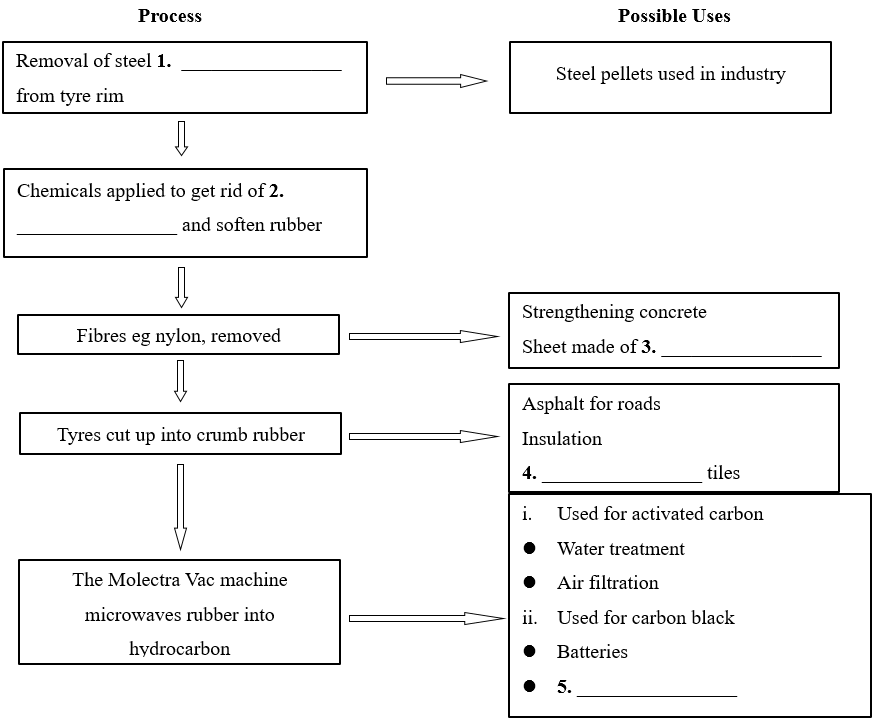
Part 1. For questions 1-5, complete the flow-chart below. Write ONE WORD ONLY for each answer (10pts)
RECYCLING TYRES
Part 2. For question 6-10, listen to a recording about the walking shark and decide whether the following statements are true (T) or false (F). Write your answers in the corresponding numbered boxes provided. (10 pts)
6. Epaulette shark’s existence on Earth is relatively short in comparison with other species of sharks.
7. Though epaulette shark has fins that resemble legs, those fins are actually thick and inflexible.
8. The heat endurance of epaulette shark is greater than the majority of other species of fish.
9. Epaulette sharks are able to breathe on land for up to one hour.
10. The striking similarities in biological systems between epaulette sharks and bull sharks are testimony to magical evolution.
Part 3. You will hear part of an interview with two graphic designers called Anita Dickinson and Joe Connolly in which they talk about going freelance. For questions 11-15, choose the answer (A, B, C or D) which fits best according to what you hear. (10pts)
11. What does Joe say about when he first started working freelance?
A. It was more complicated than he'd expected.
B. He resented having less free time than before.
C. It was necessary to have the right attitude to work.
D. He found it easy to find clients through his website.
12. Joe confesses that having to work at home on his own is________________.
A. a relief after working in a busy office.
B. a cause of loneliness for him at times.
C. something that he avoids as much as possible.
D. something that he thought he would dislike.
13. When asked about self-discipline, Anita claims that________________.
A. she checks her daily work output very carefully.
B. she is rarely tempted away from work by social media.
C. she needs certain apps to keep her focused on work.
D. she is often forced to change her working hours to fulfill contracts.
14. Anita and Joe agree that keeping up to date with trends is________________.
A. less important than being a specialist in one area.
B. difficult when balanced against other demands on time.
C. one of the most enjoyable sides of their work.
D. not as challenging as they’d expected it to be.
15. What does Joe think is the reason for his success as a freelancer?
A. He has effective negotiating skills.
B. He makes sure he has good relations with clients.
C. He gets plenty of personal recommendations.
D. He offers his services at the right price.
Part 4. For questions 16-25, listen to a piece of news about fishing and complete the summary using NO MORE THAN ONE WORDS for each gap. Write your answers in the space provided. (20 pts)
Will the ocean ever run out of fish?
Contrary to the popular view of fishing as a peaceful activity, modern industrial fishing actually resembles (16) ________________.
Huge and well-equipped fishing boats allow human to catch more diverse fishes at a greater (17) ________________and (18) ________________.
Once ignored by fishermen, Patagonian toothfish are now popular all over the world as a (19) ________________.
In China and Vietnam, shark fin is a favored ingredient in (20) ________________, leading to widespread slaughtering of this species.
It is impossible for wild fish to (21) ________________fast enough to feed the whole world.
Catching wild shrimps using nets can do great damages to habitats on the (22) ________________, while coastal shrimp farming removes storm shelters and nursery places for fish, as well as disrupts natural (23) ________________of water.
In order to give ecosystems time for recovery, it is important to impose restrictions on fishing, set up (24) ________________where fishing is strictly forbidden, and limit (25) ________________habits among consumers.
II. LEXICO – GRAMMAR (40 points)
Part 1: Choose the best answer (A, B, C or D) to each of the following questions and write your answer (A, B, C or D) in the corresponding numbered boxes. (30pts)
1. It was the best holiday ever because for once everyone got along ________________.
A. distinctively
B. famously
C. notoriously
D. prominently
2. The old train chugged along the tracks, leaving behind a ________________of smoke as it wound its way through the scenic countryside.
A. dash
B. wad
C. puff
D. drove
3. From an early age, their parents ________________them the importance of honesty and integrity, values they carried into adulthood.
A. fetched out
B. bargained for
C. drummed into
D. drove at
4. The witness's story just didn't ________________, leading the detectives to suspect there was more to the incident than was being revealed.
A. add up
B. act up
C. blow over
D. bend over
5. The restaurant had to revamp its menu because the food critics felt that the dishes were not ________________, failing to meet the high standards expected by diners.
A. up to scratch
B. by the board
C. under the counter
D. in their stride
6. Gates was a ________________competitor in the computer software industry who often crushed the competition.
A. ruthless
B. reckless
C. impetuous
D. candid
7. Despite his meticulous planning, his oversight in calculating the budget was a glaring ________________that cost the company thousands.
A. brawl
B. clash
C. blunder
D. scuffle
8. Even horses have difficulty ________________parts of this unforgiving rocky terrain.
A. overcoming
B. embarking
C. negotiating
D. undertaking
9. She managed to get her complaint resolved quickly by going through the right ________________and contacting customer service directly.
A. veins
B. rivers
C. canals
D. channels
10. Many customers balked ________________the steep price increase for the subscription service, leading some to cancel their memberships and look for alternatives.
A. at
B. in
C. of
D. upon
11. The old library was ________________of history, with its musty smell and rows of dusty books evoking memories of bygone eras.
A. insolent
B. redolent
C. insolvent
D. prevalent
12. In his role as team leader, he was expected to ________________and handle all members of the team with patience and understanding.
A. throw in the towel
B. flood the market
C. suffer fools gladly
D. get the hang of it
13. The politician's speech was filled with ________________, distracting the audience from the real issues at hand.
A. red herrings
B. red tape
C. black spots
D. black marks
14. The aroma of freshly baked bread ________________the bakery, enticing customers passing by.
A. adjourned
B. pervaded
C. dissipated
D. complimented
15. Although he ________________being passed over for promotion last year, Mark has decided to focus on improving his skills rather than holding a grudge.
A. has a chip on his shoulder about
B. bursts at the seams for
C. goes to his head for
D. beats about the bush about
16. Our discussion didn't last long since Dan took ________________at my critical remarks about his attitude and left the club without even saying goodbye.
A. medium
B. mickey
C. umbrage
D. duress
17. No more chatting and giggling, please. Everybody ________________and get back to work!
A. cut the cackle
B. chew the fat
C. settle the score
D. throw in the towel
18. You can only blame yourself for your failure, Jason. You did ________________but you were not prepared for the job interview.
A. have your fingers in the till
B. push the boat out
C. hit the nail on the head
D. get a fair crack of the whip
19. I will not accept your ________________reports any more. By now you should have learned to write a detailed report on your daily tasks.
A. rough and ready
B. hard and fast
C. prim and proper
D. quick and dirty
20. The employee was dismissed because she ________________her boss’ signature on certain documents.
A. forged
B. purged
C. counterfeited
D. impersonated
21. There have been a few cases of Asian flu recently but there ________________no cause for alarm.
A. feels to be
B. is felt to be
C. has been felt
D. was felt being
22. ‘The meeting is going to be postponed till Friday.’ ‘Oh, I’d prefer ________________as I won’t be able to attend.’
A. if it isn’t
B. if it hasn’t been
C. it if it weren’t
D. it hadn’t been
23. ________________,the diners settled the bill and left the restaurant.
A. Having hunger satisfied
B. Their hunger satisfied
C. Hunger been satisfied
D. Satisfied their hunger
24. ‘You enjoy old movies, don’t you?’ - ‘________________, I’d rather not stay up late to watch one tonight.’.
A. All the same
B. On top of that
C. That is to say
D. Granted
25. My brother gave me no help ________________with the cooking.
A. whatsoever
B. however
C. nonetheless
D. in so far
26. They arrived at the restaurant ________________it was closed temporarily.
A. discovering only that
B. and only had discovered
C. only to discover
D. only discovering
27. ‘The children don’t seem very happy.’ – ‘Don’t worry. I’ll ________________.’
A. soon have had them laughed
B. soon have them laughing
C. have them soon to laugh
D. get them soon laughing
28. The senator ________________the monument but he was called away urgently.
A. to be unveiling
B. not unveiling
C. was being unveiled
D. was to have unveiled
29. It is the secretary's job to inform all ________________.
A. the concerned in the project people
B. the people concerned in the project
C. the concerned people in the project
D. the people in the project concerned
30. ‘There were more than 200 people at Dylan’s beach house for his 21st birthday.’
- ‘Wow! That must have been ________________!’
A. a quite party
B. great party
C. some party
D. most of a party
Part 2: Write the correct form of each bracketed word in the numbered space provided. (10pts)
1. The student's fear of failing the exam turned into a ________________prophecy when their anxiety led to a lack of concentration and preparation. FILL
2. The study's results were ________________by the scientific community because the research methods were found to be flawed and unreliable. COUNT
3. His phone rang ________________during the movie, drawing glares from fellow moviegoers. OPPORTUNITY
4. The detective worked tirelessly to ________________the complex web of clues and misinformation surrounding the mysterious case. TANGLE
5. Her tireless dedication to community service is the ________________of altruism, and it inspires others to volunteer their time and resources. BODY
6. The judge believed that a ________________would be more beneficial than prison, and the youth was given a chance to rehabilitate in s supportive environment. REFORM
7. To the technical philosophers, who strictly confine themselves to the logical collation and criticism of scientific methods, he has, ________________, not seemed philosophic enough. CONTRARY
8. A full-sized tripod is far too ________________to carry around. I find this pocket – sized one is much handier. WIELD
9. The dish looked ________________due to its dull colour, but it turned out the be surprisingly delicious. APPETITE
10. After a difficult year, the athlete's ________________performance in the championship game led his team to victory. SURGE
III. READING (60 points)
Part 1: Read the following passage and choose the best option to complete the passage. (15pts)
Esperanto
When LL Zamenhof (1) ________________the auxiliary language of Esperanto in the late 1800s, he did so with certain key goals in mind: to (2) ________________the study of language easier and more learner-friendly: and to develop a universal language as a means of international communication and as a (3) ________________for promoting concord and understanding in a discordant world. His goals were influenced very much by his own experiences of growing up in Biaiystok, which is part of modern-day Poland. A multitude of different ethnic groups lived there at the time and were constantly (4) ________________with one another. It was this at which Zamenhof despaired, and he reasoned that the (5) ________________cause of dispute was the barriers to communication present on account of the lack of a common language. Therefore, he set out to create one: Esperanto.
His goals were incredibly ambitious, but was the new language a success? Well, in so far as it is the most widely spoken artificial one in existence today, with an estimated two-plus-million people worldwide fluent to some degree, you would have to say yes. However, the fact remains that Esperanto has not (6) ________________English as the lingua franca of international communication, nor has it been nearly so widely (7) ________________as Zamenhof himself would have hoped.
Therefore, judged against Zamenhof's own (8) ________________ambitions for the language, the conclusion could not be in the (9) ________________. That said, his intentions in building an entirely new language were incredibly noteworthy and that the language has (10) ________________even to the extent that it has done, with millions of active speakers, is in and of itself, quite remarkable.
1.
A. constructed
B. contorted
C. conjoined
D. condensed
2.
A. render
B. prove
C. adjust
D. portray
3.
A. mechanism
B. utensil
C. device
D. scheme
4.
A. quarrelling
B. disputing
C. debating
D. conflicting
5.
A. outlying
B. underlying
C. outstanding
D. underlining
6.
A. promoted
B. usurped
C. overturned
D. reversed
7.
A. endured
B. embraced
C. embodied
D. enhanced
8.
A. reckless
B. modest
C. lofty
D. pushy
9.
A. confirmation
B. affirmative
C. determination
D. proclamation
10.
A. enriched
B. cultivated
C. stretched
D. prospered
Part 2: Fill each of the following numbered blanks with ONE suitable word. Write your answers in the space provided. (15pts)
THE CHANGING FACE OF TECHNOLOGY
Already the widespread use of touchscreen technology has started to erode the use of the keyboard, but not entirely. One new idea on the drawing board is to (1) ________________technologies that already exist, such as screens and computers, into everyday objects. This is known as 'tangible computing' and would allow anyone to cooperate with computers using physical things. For instance, you could specify which move you want to make on a chessboard to a computer, by physically moving a piece on a real board. This would negate the (2) ________________to use the mouse or keyboard to enter your move. Researchers at MIT are already exploring other uses of this idea, (3) ________________forward plans to control on-screen experiences by manipulating real life things, and they are also prophesying wider use of flat (4) ________________, like tabletops or walls, being used as display screens by using personal projectors worn on clothing or around the neck.
Gamers are already (5) ________________to manipulating their games consoles with physical movements. This is not totally a futuristic concept, although it seems (6) ________________that office workers will want to be using extravagant arm movements to communicate with their computer. Most people are too lazy to use sweeping arm gestures all the time, (7) ________________would return to using the mouse or would prefer to communicate with their laptop through their voice or tiny finger movements. The (8) ________________idea has already been incorporated into a 3D motion sensing system that is placed in front of a computer and (9) ________________users surf the web, play games or use other software with just finger and hand gestures. This gadget is already on sale, so not a vision that is pie in the (10) ________________, but actually possible and available.
Part 3: Read the following passage and do the tasks that follow. (15pts)
The big sleep
The nature of sleep and the role it plays in our lives has long fascinated science and been the focus of many studies and a great deal of research.
A. The benefit of receiving enough sleep is essential to our inner well-being. Not enough sleep, however, means that we lack the opportunity to restore ourselves physiologically, emotionally and cognitively. It affects our mood and can result in behaviour and performance problems. When we sleep, our bodies rest but our brains are active. Sleep lays the groundwork for a productive day ahead. Although most people benefit the most from eight hours of sleep each night, this is not always what they manage to achieve. Men get slightly less sleep than women during the week (6.7 hours/night vs. 7.0 hours/night), but have fewer sleep problems, according to recent Sleep in America polls conducted annually by the National Sleep Foundation (NSF).
B. According to current scientific thought, the human body is pre-programmed for sleep. At nightfall, cells in the retina (a light sensitive membrane connected to the eye by the optic nerve) send a sleep signal to a cluster of nerve cells in the brain. These nerve cells are concentrated together in the suprachiasmatic nucleus (SCN) and are located in a part of the brain called the hypothalamus which helps regulate body temperature. The SCN is also known as the circadian clock. This biological ‘clock’ relays the message to other parts of the brain which then signals the body that it is time to sleep. For instance, the pineal gland, also located in the hypothalamus, produces a substance called melatonin, which lowers body temperature, and causes drowsiness.
C. A great deal of the information we now know about sleep and the physiological changes it causes in the brain can be traced back to the invention of the electroencephalogram in the 1950s. This machine allowed scientists to record the feeble electric currents generated on the brain without opening the skull and to depict them graphically onto a strip of paper. Brain-wave function could be examined and scientists could thereby observe sleep from moment to moment. In the 1970s it became possible for scientists to make assumptions about the role that correct breathing plays during sleep with the development of the technology to measure respiration. It was here that science really began to understand the nature of sleep and the role it plays in people's lives.
D. As well as uncovering the physiological changes occurring during sleep. The New England Journal of Medicine reported that sleep concerns were a public health threat as serious as smoking and in the years since, medical researchers have linked sleep disorders with many life-threatening diseases. Even though more than 70 million Americans have a sleeping problem, most cases go undiagnosed and untreated, so the true economic and sociological damage caused by these disorders is unknown although, the economic cost is conservatively estimated to be billions of dollars a year in health care costs and lost productivity. Breathing problems during sleep represent by far the greatest proportion of sleep disorders and cause the most concern, with studies showing that between 50% and 80% of stroke and heart failure patients have breathing problems during sleep.
E. Scientific studies have found that children who are identified as snorers or those who have poor sleeping patterns at around the age of four or five, scored lower than average in Intelligence Quotient (IQ) tests, not only during the sleep deprivation period but subsequent to that. There are also suggestions that ongoing sleep deprivation in adults can cause permanent damage.
F. Teenagers can have peculiar sleep requirements. It has always been known that adolescents spend more time sleeping than adults, but science has only recently isolated the reasons for this. Research now shows that growth hormones are secreted during slow-wave sleep and teenagers do indeed, need more of this kind of sleep than at any other stage in their lives. Chronic lack of sleep among teenagers means that as a group they are more likely to use stimulants and experience negative mood swings. Statistics also indicate that young drivers are responsible for more than one-half of fall-asleep crashes.
G. However, it is not just young people who pay the price for lack of proper sleep. Workers are robbing themselves of sleep in order to increase productivity in both their social and working lives. In recent years, however, the identification of driver fatigue as the possible cause of 1/3 of all accidents provides some indication of the price we are paying for such a trade-off. Extensive scientific research indicates that chronic tiredness has been the cause of environmental disasters, nuclear mishaps and several well- documented near misses in the air. Scientists are beginning to argue that the lengthening of the working day is harming workers, their families and society. In the long run, productivity will suffer.
H. As a reaction against this disturbing trend, there has been increased support for regulation of the number of hours worked by employees in demanding jobs, such as doctors, nurses, pilots, bus drivers and truck drivers. Legislation is being drafted to limit work hours, thus forcing companies to become instrumental in changing work cultures to ensure employees are getting enough rest and leisure time in order to avoid chronic tiredness and its devastating consequences.
Questions 1-3
Look at the following statements. Indicate:
TRUE if the statement agrees with information in the passage
FALSE if the statement contradicts information in the passage
NOT GIVEN the information is not given in the passage.
1. 80% of all stroke patients experience breathing problems in their sleep.
2. Sleep deprivation can affect intellectual performance in adults.
3. Companies have to be more active in preventing accidents caused by human factors.
Questions 4-10
Choose the statement (i-x) below that best summarises each paragraph (A-G).
4. Paragraph A________________
5. Paragraph B________________
6. Paragraph C ________________
7. Paragraph D________________
8. Paragraph E________________
9. Paragraph F________________
10. Paragraph G_______________
LIST OF SUMMARY STATEMENTS
i The negative effects of chronic sleep deprivation have tragic consequences,
ii There are many advantages to getting sufficient sleep.
iii Current medical research maintains that sleep is critical to early development.
iv Technological advances contributed significantly to sleep research.
v Efforts are being made to decrease the incidence of work-related accidents and disasters.
vi Sleep problems affect a significant percentage of the population and have far-reaching consequences.
vii Lack of the right kind of sleep can affect behaviour.
viii Physiological changes occur to create sleep.
ix Sleep has an important function in our daily lives.
x The electroencephalogram revolutionised sleep research.
Part 4: Read the following passage and choose the best option A, B, C or D to answer the questions below it. (15pts)
Theories of mass communication
Effects of mass media exposure on the receiver
Mass communication: the use of mass media channels of communication to convey a message from a single source to a large group of the anonymous public.
The above definition extends to include advertising, campaigning, journalism, and even public relations. It can also refer to a variety of media, from books and magazines to television, radio and film. The mass media are often referred to as performing a “gatekeeper function,” monitoring streams of information from various sources to the public. They bear the responsibility of selecting which information is transmitted, distributing it, and ensuring its accuracy. They also reinterpret or present information in a way that makes it comprehensible to the general public. For example, they might modify technical language so that it can be understood by the average receiver.
The history of mass communication is relatively brief, developing significantly with the introduction of television, and being revolutionized in recent years as people began to harness the full potential of the Internet as a communication tool. Associated with studies of mass communication are several theories explaining the effect of mass media exposure on the receiver, and its influence on individual reaction and perception.
HYPODERMIC NEEDLE THEORY. This early theory of mass communication was based on the idea that information conveyed by the media remained unchanged by distribution, and arrived in the minds of receivers in the form that its source intended. [A] It soon became clear that such a concept was inherently flawed. This assumption of a common consciousness ignored the different ways that individuals perceive and interpret information. [B] It also failed to consider the idea that messages could be partially conveyed, or that previous exposure to similar messages could alter receiver attitude. [C] An advertisement for a sale, for example, would be received in different ways. Receivers with experience of similar advertising or knowledge of the topic would judge the value of the information - in this case, the value for money of the deal advertised — based on their own knowledge and experience. Contrary to what the theory suggests, the “message” intended by the advertiser is thus passed through a filter of individual perception. [D]
CULTIVATION THEORY. This is based on the idea that over-immersion in information from any medium influences perception, resulting in altered expectations of the real world. To illustrate: an individual who reads extensively on social issues is more likely to overestimate the probability of personally experiencing real hardship and danger in life. Though media coverage may refer to a minuscule portion of reality, over-exposure alters receiver attitude and gives the impression that such issues are commonplace. Similarly, heavily immersed receivers, regardless of their original or inherent perspectives, are likely to quickly come to identify with opinions and social groups frequently portrayed in the media.
AGENDA-SETTING THEORY. The crux of this theory is the accessibility principle: the idea that an individual makes decisions based on the information which is most prominent (or more easily accessible) in their mind. Consistent with this logic, repeated media coverage, by its mere act, elevates an issue in the mind of a receiver, increasing its accessibility. Thus, the media are able to promote issues and influence public opinion regarding their relative significance.
FRAMING THEORY. Often considered an offshoot of the agenda-setting theory, framing refers to the way that information is allocated various values and “fields of meaning” through being placed within different contexts. This, accordingly, influences how the public processes the information. The “frame” - the way the information is presented to a receiver - is often a deliberate or coincidental creation of associations. Bias can be conveyed to the receiver without altering the information itself, through the use of metaphor, comparison with contrasting situations, emotive keywords and negative or positive expression.
SPIRAL OF SILENCE. Due to their ubiquity, the mass media are often able to present a view and promote it as the opinion of the public majority. This can result in what is known as a spiral of silence for those who do not share the perceived majority viewpoint. As this opinion reverberates through other media, those who disagree with it become convinced that they are in the minority. Unwilling to isolate themselves from the masses by voicing disagreement, they keep silent. Every time the perceived “majority” opinion recurs in any source, the perception is subconsciously reinforced and the spiral is perpetuated. This ostensible lack of public dissent, of course, further reinforces the impression that the opinion shown in the media is indeed held by the majority - which can, in turn, create new spirals.
1. In stating that mass media have a “gatekeeper function," the author means________________.
A. they decide the form of media used
B. they are responsible for creating information
C. they oversee the public's access to information
D. they have an interactive relationship with the public
2. What is implied about early use of the Internet?
A. The public was denied access to it.
B. Its significance was not fully realized.
C. It was overly complicated to use.
D. It quickly replaced television.
3. According to paragraph 3, the hypodermic needle theory does not take into account________________.
A. receiver individuality
B. common consciousness
C. similar information available
D. distribution method
4. The word it in the passage refers to________________.
A. the flawed nature of the theory
B. the different forms of perception
C. the assumption of a common consciousness
D. the interpretation of information
5. The author discusses a sale advertisement in paragraph 3 in order to________________.
A. provide an example of how already-received information can distort an intended message.
B. show one instance where the theory works in practice.
C. argue that the concept of advertising is flawed.
D. illustrate how understanding a message depends on its accuracy.
6. According to paragraph 4, over-immersion in social issues covered by the media can result in individuals who________________.
A. experience an above-average number of difficulties.
B. expect to face difficulties in life.
C. consider themselves fortunate despite the hardships they face.
D. are better prepared to deal with potential difficulties.
7. Which of the following best expresses the meaning of the word crux?
A. argument
B. ideal model
C. central point
D. example
8. According to paragraph 6, all of the following are ways of framing information EXCEPT________________.
A. changing non-essential facts
B. adapting language style
C. explaining by contrast
D. selecting vocabulary
9. According to paragraph 7, why do people stay silent when they disagree with a media-promoted opinion?
A. They believe they have misunderstood.
B. They don’t want to voice a majority opinion.
C. They are reluctant to contradict the media.
D. They consider themselves to be outnumbered.
10. The four squares [■] in paragraph 3 indicate where the following sentence can be added to the passage.
This example highlights the key omission of the hypodermic needle theory, which effectively overlooks a receiver’s agency to individually evaluate information.
Choose your answer by circling the square where the sentence best fits.
[A]
[B]
[C]
[D]
D. WRITING (50 pts)
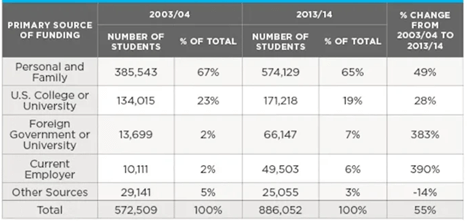
Part 1. The table below shows the primary funding sources of international students in the US during the years 2003-04 and 2013-14. Summarise the information by selecting and reporting the main features, and make comparisons where relevant. (20pts)
..................................................................................................................................................
..................................................................................................................................................
..................................................................................................................................................
Part 3. Essay writing (30 pts)
Many tale stories containing details such as cruel revenge, killing wild animals or deforestation for agriculture are no longer proper in the context of the modern world, so they should be modified before being taught to children, or even eliminated from the school curriculum.
Do you agree or disagree with this opinion?
Give reasons for your answer and include any relevant examples from your own experience or knowledge. Write at least 350 words.
..................................................................................................................................................
..................................................................................................................................................
..................................................................................................................................................
THE END
................................
................................
................................
Xem thêm đề thi học sinh giỏi Tiếng Anh lớp 10 hay khác:
Đề thi học sinh giỏi Tiếng Anh 10 trường THPT Chuyên Lào Cai (Lào Cai) năm 2024
Đề thi học sinh giỏi Tiếng Anh 10 trường THPT Chuyên Lam Sơn (Thanh Hóa) năm 2024
Đề thi học sinh giỏi Tiếng Anh 10 trường THPT Chuyên Hùng Vương (Bình Dương) năm 2024
Đề thi học sinh giỏi Tiếng Anh 10 trường THPT Chuyên Hưng Yên (Hưng Yên) năm 2024
Đề thi học sinh giỏi Tiếng Anh 10 trường THPT Chuyên Bắc Ninh (Bắc Ninh) năm 2022-2023
Đề thi học sinh giỏi Tiếng Anh 10 trường THPT Chuyên Lê Khiết (Quảng Ngãi) năm 2023
ĐỀ THI, GIÁO ÁN, SÁCH ĐỀ THI DÀNH CHO GIÁO VIÊN VÀ PHỤ HUYNH LỚP 9
Bộ giáo án, bài giảng powerpoint, đề thi dành cho giáo viên và sách dành cho phụ huynh tại https://tailieugiaovien.com.vn/ . Hỗ trợ zalo VietJack Official
Tổng đài hỗ trợ đăng ký : 084 283 45 85



Đã có app VietJack trên điện thoại, giải bài tập SGK, SBT Soạn văn, Văn mẫu, Thi online, Bài giảng....miễn phí. Tải ngay ứng dụng trên Android và iOS.


Bộ đề thi các lớp các môn học được Giáo viên nhiều năm kinh nghiệm tổng hợp và biên soạn theo Thông tư mới nhất của Bộ Giáo dục và Đào tạo, được chọn lọc từ đề thi của các trường trên cả nước.
Nếu thấy hay, hãy động viên và chia sẻ nhé! Các bình luận không phù hợp với nội quy bình luận trang web sẽ bị cấm bình luận vĩnh viễn.
- Đề thi lớp 1 (các môn học)
- Đề thi lớp 2 (các môn học)
- Đề thi lớp 3 (các môn học)
- Đề thi lớp 4 (các môn học)
- Đề thi lớp 5 (các môn học)
- Đề thi lớp 6 (các môn học)
- Đề thi lớp 7 (các môn học)
- Đề thi lớp 8 (các môn học)
- Đề thi lớp 9 (các môn học)
- Đề thi lớp 10 (các môn học)
- Đề thi lớp 11 (các môn học)
- Đề thi lớp 12 (các môn học)
- Giáo án lớp 1 (các môn học)
- Giáo án lớp 2 (các môn học)
- Giáo án lớp 3 (các môn học)
- Giáo án lớp 4 (các môn học)
- Giáo án lớp 5 (các môn học)
- Giáo án lớp 6 (các môn học)
- Giáo án lớp 7 (các môn học)
- Giáo án lớp 8 (các môn học)
- Giáo án lớp 9 (các môn học)
- Giáo án lớp 10 (các môn học)
- Giáo án lớp 11 (các môn học)
- Giáo án lớp 12 (các môn học)



 Giải bài tập SGK & SBT
 Tài liệu giáo viên
 Sách
Sách
 Khóa học
 Thi online
 Hỏi đáp