Đề thi thử Tiếng Anh Tốt nghiệp THPT 2025-2026 Sở Lâm Đồng
Bài viết đề thi thử Tốt nghiệp THPT Tiếng Anh năm 2025-2026 Sở Lâm Đồng. Qua bài viết này sẽ giúp Giáo viên có thêm tài liệu giảng dạy, giúp học sinh có thêm đề ôn thi tốt nghiệp THPT Tiếng Anh.
Đề thi thử Tiếng Anh Tốt nghiệp THPT 2025-2026 Sở Lâm Đồng
Chỉ từ 500k mua trọn bộ Đề thi thử tốt nghiệp THPT 2026 Tiếng Anh (từ Trường/Sở) theo cấu trúc mới bản word có lời giải chi tiết:
- B1: gửi phí vào tk:
1133836868- CT TNHH DAU TU VA DV GD VIETJACK - Ngân hàng MB (QR) - B2: Nhắn tin tới Zalo VietJack Official - nhấn vào đây để thông báo và nhận đề thi
|
SỞ GIÁO DỤC VÀ ĐÀO TẠO LÂM ĐỒNG ĐỀ CHÍNH THỨC |
KỲ THI THỬ TỐT NGHIỆP TRUNG HỌC PHỔ THÔNG NĂM 2026 Môn thi: TIẾNG ANH Thời gian làm bài: 50 phút (không tính thời gian phát đề) |
Họ và tên: ………………………………………….. Số báo danh: ……………… Mã đề 1101
Read the following piece of news and mark the letter A, B, C and D on your answer sheet to indicate the option that best fits each of the numbered blanks from 1 to 6.
A Ritual of Remembrance
Every spring, people on Ly Son Island gather to perform a meaningful ceremony to honor soldiers who lost their lives at sea while protecting Vietnam’s sovereignty. The event attracts a large (1) ________ of local residents and visitors. It is considered one of the most (2) ________ ceremonies in the region.
The ritual (3) ________ at Am Linh Temple by local communities, includes offerings, music, and symbolic activities. Effigies made from clay and straw (4) ________ the soldiers who never returned. It is among the important cultural events that show respect for national history.
This long-standing cultural event, (5) ________ takes place every year, reminds people of the sacrifices made by earlier generations. Over time, it has helped the islanders (6)________ the reputation for their cultural traditions and national identity.
(Adapted from https://heritagevietnamairlines.com)
Question 1.
A. number
B. amount
C. volume
D. level
Question 2.
A. emotion
B. emotional
C. emotionally
D. emotionless
Question 3.
A. holding
B. held
C. has held
D. is holding
Question 4.
A. advertise
B. organise
C. represen
D. decorate
Question 5.
A. who
B. which
C. that
D. where
Question 6.
A. bring up
B. build up
C. take up
D. turn up
Read the following leaflet and mark the letter A, B, C or D on your answer sheet to indicate the option that best fits each of the numbered blanks from 7 to 12.
PROTECTING FORESTS IN CENTRAL ANNAMITES
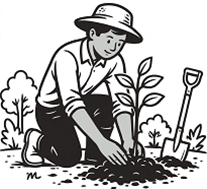
Together for Nature and Local Communities
Forests in Central Annamites, Viet Nam are vital for both people and wildlife.
(7) ________, illegal logging and land use are damaging many forest areas. This leads (8) ________ environmental problems such as biodiversity loss and climate change.
How Can We Help?
• Encourage (9) ________ individual to use resources wisely.
• Support sustainable farming practices.
• Protect natural forest areas.
• Preserve wildlife habitats.
Using (10) ________ can reduce pressure on forests. Education programmes also help raise awareness about conservation. Avoiding excessive (11) ________ of forest resources is necessary for long-term protection. Developing (12) ________ solutions will benefit both nature and local communities.
Protect Forests Today for a Greener Tomorrow!
(Adapted from https://www.worldwildlife.org)
Question 7.
A. However
B. Otherwise
C. Though
D. Therefore
Question 8.
A. on
B. at
C. in
D. to
Question 9.
A. few
B. each
C. much
D. many
Question 10.
A. products sustainable wood
B. wood sustainable products
C. wood products sustainable
D. sustainable wood products
Question 11.
A. declaration
B. exploitation
C. restoration
D. development
Question 12.
A. impulsive
B. aggressive
C. feasible
D. mutual
Mark the letter A, B, C or D on your answer sheet to indicate the best arrangement of utterances or sentences to make a cohesive and coherent exchange or text in each of the following questions from 13 to 17.
Question 13.
a. Lisa: Okay, let me know if you need any help.
b. Lisa: Are you ready for the Math test tomorrow?
c. Jack: Not really, I still need to review a few chapters tonight.
A. a-b-c
B. b-c-a
C. b-a-c
D. a-c-b
Question 14.
a. Tom: I used to study from books, but now I learn a lot through online platforms and mobile apps.
b. Anna: Same here! It’s more flexible, but I think traditional classroom learning still has its own benefits.
c. Anna: Do you use any new ways to learn English these days?
d. Anna: I believe each method has its own strengths that we can take full advantage of.
e. Tom: You’re right. Face-to-face interaction gives us real communication that’s hard to replace.
A. d-a-c-e-b
B. c-a-b-e-d
C. d-e-b-a-c
D. c-a-d-e-b
Question 15.
a. Moreover, educating residents about responsible waste disposal practices helps cultivate environmental awareness and encourages active civic participation in the city’s sustainability initiatives.
b. Effective waste sorting plays a pivotal role in sustainable urban management in Ho Chi Minh City, as it directly contributes to improved recycling efficiency and a significant reduction in landfill dependency.
c. For example, materials such as plastic, paper, and glass should be separated from food waste, as they can be recycled and reintegrated into production cycles when properly collected.
d. In conclusion, by promoting systematic waste sorting across Ho Chi Minh City, local authorities and communities can work together to create a cleaner urban environment while maximizing resource reuse and minimizing ecological strain.
e. A crucial component of this process involves raising public awareness of waste classification, including recyclable materials, organic waste, and residual household refuse, each of which requires distinct handling methods.
A. b-e-c-a-d
B. c-d-b-a-e
C. b-c-e-a-d
D. e-a-d-b-c
Question 16.
Hi Gemma,
a. I would greatly appreciate it if you could provide further details regarding the programme structure and assessment criteria.
b. I am writing to express my interest in enrolling in your advanced AI-integrated language course.
c. In particular, I am keen to understand how the course accommodates learners seeking both flexibility and academic rigour.
d. I look forward to your response and hope to proceed with the application in due course.
e. Having reviewed the information available on your website, I am particularly impressed by the emphasis on personalised learning pathways.
Write back soon,
Billy
A. e-b-d-c-a
B. b-a-d-c-e
C. a-e-c-b-d
D. b-e-c-a-d
Question 17.
a. This transformation also included the development of new industrial areas, as farmland nearby was converted into factories and small production sites.
b. Overall, these changes highlight the modernisation of Lakeview, turning it from a peaceful residential district into a more dynamic and commercially active area.
c. Between 2010 and 2022, the outer areas of Lakeview city experienced significant changes, reflecting a shift towards urban growth and economic development.
d. Housing areas were greatly affected, with many old houses being replaced by modern buildings, and a local park being relocated.
e. At the same time, commercial facilities expanded rapidly, especially with the construction of a large mall and a parking lot on former residential land.
A. c-d-e-a-b
B. c-e-d-a-b
C. c-a-d-e-b
D. c-d-a-b-e
Read the following passage and mark the letter A, B, C or D on your answer sheet to indicate the option that best fits each of the numbered blanks from 18 to 22.
Academic pressure from well-meaning parents has become a growing concern affecting students’ emotions and development. Many parents strongly incentivise their children to pursue rigorous academic schedules encompassing an extensive range of subjects. This pressure (18) ________. They might feel overwhelmed by the number of assignments and exams they have to prepare for each week. Parents also want their children to succeed, which can result in more stress and anxiety. Moreover, (19) ________.
Some students (20) ________ find it difficult to balance their studies with other activities. Such children frequently find themselves deprived of opportunities for leisure pursuits or meaningful social interaction, a sustained imbalance that can undermine mental well-being and precipitate academic burnout. Parents may not realize the impact of their expectations on their children’s well-being. (21) ________.
To help reduce this pressure, students should be given time to relax and explore their interests. Given the chance to take breaks, (22) ________. Constructive parental communication and well-balanced daily routines contribute significantly to healthier learning habits, stronger resilience, and sustained long-term success. Maintaining a healthy balance between academic responsibilities and personal well-being enables students to develop positively and thrive successfully in the long term.
(Adapted from OECD, Students’ Well-Being and Academic Pressure)
Question 18.
A. having frequently been experienced by students who struggle to keep pace with escalating academic demands
B. is frequently experienced by students who find it increasingly difficult to meet academic expectations
C. that is frequently experienced by students who encounter persistent difficulty in managing academic workloads
D. of which it is frequently experienced by students who face mounting pressure to keep up academically
Question 19.
A. because academic rigor is not inherently paramount, making it imperative that children affording sufficient opportunities for leisure and enjoyment.
B. while learning should remain intrinsically rewarding, an excessive preoccupation with grades can enhance students’ genuine engagement with education
C. students frequently achieve higher levels of performance when intrinsically motivated, and measured pressure may enhance confidence and creative capacity
D. when learning becomes excessively grade-focused, students’ genuine engagement with education is gradually eroded
Question 20.
A. those have come to organise virtually every aspect of their lives around academic obligations
B. maintain a well-balanced lifestyle supported by family encouragement and guidance
C. that daily routines have overwhelmingly dictated by institutional academic expectations
D. whose lives are predominantly oriented around scholastic responsibilities
Question 21.
A. Instead of encouraging a love for learning, they might unintentionally create a fear of failure
B. Students believe that studying hard will always guarantee success in all subjects without any stress
C. Some children enjoy school so much that they find studying easy and rarely need to seek help
D. Many students struggle to manage their time, leading to poor grades and missed deadlines in school
Question 22.
A. their efforts will yield measurable improvements in academic performance
B. demonstrable improvements are observed in their academic performance
C. students tend to exhibit significantly higher levels of academic attainment
D. substantial improvements can be achieved across academic domains
Read the following passage and mark the letter A, B, C or D on your answer sheet to indicate the best answer to each of the following questions from 23 to 30.
There are countless technological innovations shaping the modern world today. However, the majority of global users rely on a relatively small number of dominant digital platforms, including search engines, social media networks, cloud-based services, and mobile applications. According to recent reports by the World Economic Forum, this concentration of technological power has accelerated innovation while simultaneously raising concerns about digital inequality, data privacy, and market monopolisation.
When technology evolves rapidly, it inevitably transforms how societies function. Digital tools influence communication patterns, reshape labour markets, and redefine access to information. For example, artificial intelligence systems are increasingly used in healthcare, finance, and education. Their efficiency stems from the ability to process vast quantities of data, enabling faster decision-making than traditional human-led systems. As a result, productivity has improved across multiple sectors.
In response to these developments, governments and institutions are attempting to regulate technological growth responsibly. Several countries have introduced digital literacy programmes to help citizens navigate online environments safely. Others have implemented data-protection laws to ensure that personal information is not exploited. These measures illustrate how policy intervention can mitigate technological risks while preserving innovation.
Technology also offers new solutions for addressing large-scale challenges. Open-source platforms, online learning systems, and remote collaboration tools have expanded access to knowledge worldwide. Because such technologies are widely accessible via the Internet, individuals from diverse backgrounds can acquire skills, participate in global discourse, and contribute to digital economies. Nevertheless, experts emphasise that technological progress must be guided by ethical frameworks to ensure long-term social benefit rather than unchecked automation.
(Adapted from World Economic Forum & OECD reports on digital transformation)
Question 23. Which of the following is NOT mentioned in paragraph 1 as a dominant digital platform?
A. search engines
B. social media networks
C. cloud-based services
D. offline applications
Question 24. The word accelerated in paragraph 1 could be best replaced by ______.
A. expedited
B. inhibited
C. facilitated
D. transferred
Question 25. Which of the following best paraphrases the underlined sentence in paragraph 2?
A. Their effectiveness comes from their capacity to handle small amounts of data, allowing quicker decisions than systems controlled by humans.
B. Because they can analyse enormous volumes of information, these systems make decisions more gradually than traditional human-operated methods.
C. Their high level of efficiency is due to the ability to process massive data sets and support faster decision-making in multiple sectors.
D. By processing huge quantities of data, these systems can reach decisions more quickly than conventional systems managed by humans.
Question 26. The word Others in paragraph 3 refers to ______.
A. These developments
B. Some countries
C. Digital literacy programmes
D. Online environments
Question 27. The word mitigate in paragraph 3 is OPPOSITE in meaning to ______.
A. distribute
B. accumulate
C. diminish
D. alleviate
Question 28. Which of the following is TRUE according to the passage?
A. Technological dominance boosts innovation but increases concerns about inequality, misinformation, and economic monopolies.
B. Governments focus primarily on promoting innovation rather than addressing risks related to technology.
C. Ethical considerations are regarded as essential in guiding technological development for long-term societal benefits.
D. Governments and organisations are trying to carefully find out technological development in a responsible and sustainable manner.
Question 29. In which paragraph does the writer mention a present causal relationship?
A. Paragraph 1
B. Paragraph 2
C. Paragraph 3
D. Paragraph 4
Question 30. In which paragraph does the writer discuss the technology’s contribution to the global dissemination of knowledge?
A. Paragraph 1
B. Paragraph 2
C. Paragraph 3
D. Paragraph 4
Read the following passage and mark the letter A, B, C or D on your answer sheet to indicate the best answer to each of the following questions from 31 to 40.
In the era of globalization, mass media has emerged as both a conduit of cultural exchange and a catalyst of cultural homogenization. Through film, television, and music, dominant cultures circulates their narratives across borders, shaping consumer tastes and social norms worldwide. Yet the same process jeopardizes local traditions, which struggle to remain visible. The ubiquity of Western pop culture, obliterating many regions once saturated with indigenous practices, illustrates the asymmetry of influence. [I]
Scholars debate whether globalization enriches cultural hybridity or erodes distinctiveness. On one hand, exposure to foreign traditions can foster cosmopolitanism; on the other, unchecked dissemination often mirrors cultural imperialism. Media theorist John Tomlinson has argued that global flows of content tend to privilege dominant powers, marginalizing local voices. This tension becomes especially evident in emerging economies, where imported media frequently eclipses domestic production. [II]
Importantly, the media does not simply transmit culture passively; it reframes it. Content is adapted, or resisted, producing hybrid identities. “To consume global media is never to abandon one’s identity entirely; rather, it is to negotiate between worlds”, notes cultural critic Ines Tasya Jadidah. Nonetheless, corporations seeking profit standardize cultural products to reach wider audiences, thereby reducing diversity. [III]
Strategies to safeguard pluralism include promoting local content, supporting minority creators, and investing in media literacy. Nations such as France and Canada impose quotas requiring broadcasters to feature domestic productions. Meanwhile, grassroots initiatives empower marginalized communities to produce their own narratives, counteracting dominant scripts. Still, critics warn that without structural reforms in global media markets, such efforts may remain insufficient. [IV] The challenge, therefore, is not merely technical but ethical: how to balance cultural exchange with cultural survival. Policymakers must craft environments where diversity thrives, while corporations must embrace responsibility beyond profit. In this light, global media can function as both a bridge and a barrier.
(Adapted from Journal of East-West Thought)
Question 31. According to paragraph 1, local traditions are increasingly threatened because they ______.
A. are overshadowed by the widespread influence of dominant global cultures
B. receive substantial support from international entertainment industries
C. struggle to compete with globally circulated cultural products that shape public preferences
D. are gradually transformed to align with internationally accepted cultural standards
Question 32. The word circulates in paragraph 1 mostly means ______.
A. contaminate
B. disseminate
C. accommodate
D. exaggerate
Question 33. Which of the following best paraphrases the underlined sentence in paragraph 2?
A. While contact with foreign customs can promote cosmopolitan values, the uncontrolled spread of external cultures frequently reflects cultural imperialism.
B. Because interaction with foreign customs can cultivate a cosmopolitan outlook, unregulated cultural dissemination often resembles a form of cultural imperialism.
C. Engagement with overseas traditions can promote global-mindedness; therefore, excessive cultural diffusion may reduce cultural imperialism.
D. Whereas foreign cultural exposure has the potential to nurture cosmopolitanism, restricted dissemination commonly perpetuates cultural imperialism.
Question 34. The word This in paragraph 2 refers to ______.
A. The privileging of dominant powers in media flows
B. The enrichment of cultural hybridity through globalization
C. The rejection of imported media by emerging economies
D. The equal coexistence of cosmopolitan traditions
Question 35. Which of the following best summarises paragraph 3?
A. Through processes of resistance, adaptation, and negotiation, media redefines culture and produces hybrid identities, even as corporations standardize cultural products and foster diversity.
B. Rather than merely transmitting culture passively, the media continuously reshapes cultural values through adaptation and resistance, producing hybrid identities globally.
C. Media reshapes culture through negotiation, adaptation and resistance, forming hybrid identities while corporations standardize content, reducing diversity.
D. Media influences cultural evolution through adaptation and resistance, weakening hybrid identities while corporate standardization contributes to the decline of cultural diversity.
Question 36. According to paragraph 3, why do corporations standardize cultural products?
A. to preserve cultural uniqueness across regions
B. to make products suitable for broader commercial goals
C. to encourage resistance to dominant cultural forms
D. to strengthen local cultural identities
Question 37. What is the primary purpose of grassroots initiatives mentioned in the passage?
A. to increase commercial competitiveness in global media industries
B. to reinforce national control over international broadcasting flows
C. to enable local communities to produce and share their own narratives
D. to replace existing cultural policies with market-driven strategies
Question 38. Where in the passage does the following sentence best fit?
Without comprehensive regulation, market forces will likely continue to privilege dominant media powers at the expense of diversity.
A. [I]
B. [II]
C. [III]
D. [IV]
Question 39. Which of the following can be inferred from the passage?
A. The expansion of global media networks primarily depends on technological innovation rather than cultural considerations.
B. Ethical concerns arise because decisions about media dissemination inevitably influence which cultures are preserved or marginalized.
C. The ethical dimension of globalization can only be addressed through stricter censorship of foreign media content.
D. Advances in communication technology have effectively eliminated conflicts between cultural exchange and cultural preservation.
Question 40. Which of the following best summarises the entire passage?
A. The passage argues that globalization, by diffusing dominant cultural forms through mass media, invariably secures pluralism and guarantees that indigenous practices will prosper alongside imported traditions.
B. The text explores how global media simultaneously promotes cultural exchange and threatens diversity, underscores the risks of homogenization, and considers policy and grassroots strategies to sustain pluralism in the face of corporate power.
C. The article maintains that grassroots media activism has effectively neutralized the dangers of cultural imperialism, leaving only minor technical challenges for policymakers to address in the global marketplace.
D. The author concludes that cultural homogenization is an inevitable outcome of globalization, contending that no political or community interventions are capable of mitigating its destructive effects on local traditions.
-------------THE END -------------
Xem thêm đề thi thử Tiếng Anh năm 2025-2026 tốt nghiệp THPT trên cả nước khác:
Đề thi thử Tiếng Anh Tốt nghiệp THPT 2025-2026 Sở Hưng Yên (Lần 1)
Đề thi thử Tiếng Anh Tốt nghiệp 2025-2026 trường THPT Mê Linh (Hưng Yên)
Đề thi thử Tiếng Anh Tốt nghiệp THPT 2025-2026 Sở Phú Thọ (Lần 2)
Đề thi thử Tiếng Anh Tốt nghiệp THPT 2025-2026 Sở Sơn La (Lần 2)
Xem thêm đề ôn thi Tốt nghiệp THPT các môn học:
Xem thêm đề thi thử Tốt nghiệp THPT các môn học:
Tài liệu ôn thi Tốt nghiệp THPT các môn học:
- 8 Chuyên đề Toán ôn thi Tốt nghiệp THPT 2026
- 11 Chuyên đề toán thực tế lớp 12
- 14 Chuyên đề ôn thi Tốt nghiệp THPT Vật Lí 2026
- 1000 câu trắc nghiệm lý thuyết Vật Lí ôn thi Tốt nghiệp THPT 2026
- 10 Chuyên đề ôn thi Tốt nghiệp THPT Sinh học 2026
- 1200 câu trắc nghiệm lý thuyết Sinh học ôn thi Tốt nghiệp THPT 2026
- Chuyên đề Địa Lí ôn thi Tốt nghiệp THPT 2026
- Trọng tâm Địa Lí 12 ôn thi tốt nghiệp
- Chuyên đề KTPL ôn thi Tốt nghiệp THPT 2026
- Kiến thức trọng tâm KTPL 12
- Chuyên đề Lịch Sử ôn thi Tốt nghiệp THPT 2026
- Chuyên đề Ngữ văn ôn thi Tốt nghiệp THPT 2026
- Ngữ liệu ngoài sgk lớp 12 phần Thơ
- Ngữ liệu ngoài sgk lớp 12 phần Truyện
- 21 Chuyên đề ôn thi Tốt nghiệp THPT Hóa 2025
- 1000 câu trắc nghiệm lý thuyết Hóa thi Tốt nghiệp THPT 2026
- 15 Chuyên đề ôn thi Tiếng Anh Tốt nghiệp THPT 2026
Xem thêm đề ôn thi Đánh giá năng lực, Đánh giá tư duy các trường:
TÀI LIỆU CLC DÀNH CHO GIÁO VIÊN VÀ PHỤ HUYNH LỚP 12
Bộ giáo án, bài giảng powerpoint, đề thi file word có đáp án 2026 tại https://tailieugiaovien.com.vn/
Hỗ trợ zalo: VietJack Official
Tổng đài hỗ trợ đăng ký: 084 283 45 85
 500+ đề thi thử tốt nghiệp THPT Quốc gia form 2026
41 tài liệu
500+ đề thi thử tốt nghiệp THPT Quốc gia form 2026
41 tài liệu
 100+ đề thi HSA,TSA,V-ACT,BCA,BQP...2026
95 tài liệu
100+ đề thi HSA,TSA,V-ACT,BCA,BQP...2026
95 tài liệu
 Đề thi giữa kì, cuối kì 12
254 tài liệu
Đề thi giữa kì, cuối kì 12
254 tài liệu
 Chuyên đề dạy thêm Toán, Lí, Hóa... 12
71 tài liệu
Chuyên đề dạy thêm Toán, Lí, Hóa... 12
71 tài liệu
 Đề thi HSG 12
8 tài liệu
Đề thi HSG 12
8 tài liệu
 Bài giảng Powerpoint 12
42 tài liệu
Bài giảng Powerpoint 12
42 tài liệu
Công cụ giáo viên (2048.VN)
Tạo- trộn đề thi miễn phí từ file PDF, Word, Giao bài nhanh chóng, Hoàn toàn Free
- Soạn văn 12 (hay nhất)
- Soạn văn 12 (ngắn nhất)
- Soạn văn 12 (siêu ngắn)
- Giải sgk Toán 12
- Giải Tiếng Anh 12 Global Success
- Giải sgk Vật Lí 12
- Giải sgk Hóa học 12
- Giải sgk Sinh học 12
- Giải sgk Lịch Sử 12
- Giải sgk Địa Lí 12
- Giải sgk Giáo dục KTPL 12
- Giải sgk Tin học 12
- Giải sgk Công nghệ 12
- Giải sgk Hoạt động trải nghiệm 12
- Giải sgk Giáo dục quốc phòng 12
- Giải sgk Âm nhạc 12
- Giải sgk Mĩ thuật 12